
Adult Diaper Market Size and Share
Market Overview
| Study Period | 2021 - 2031 |
|---|---|
| Market Size (2026) | USD 15.57 Billion |
| Market Size (2031) | USD 24.44 Billion |
| Growth Rate (2026 - 2031) | 9.43 % |
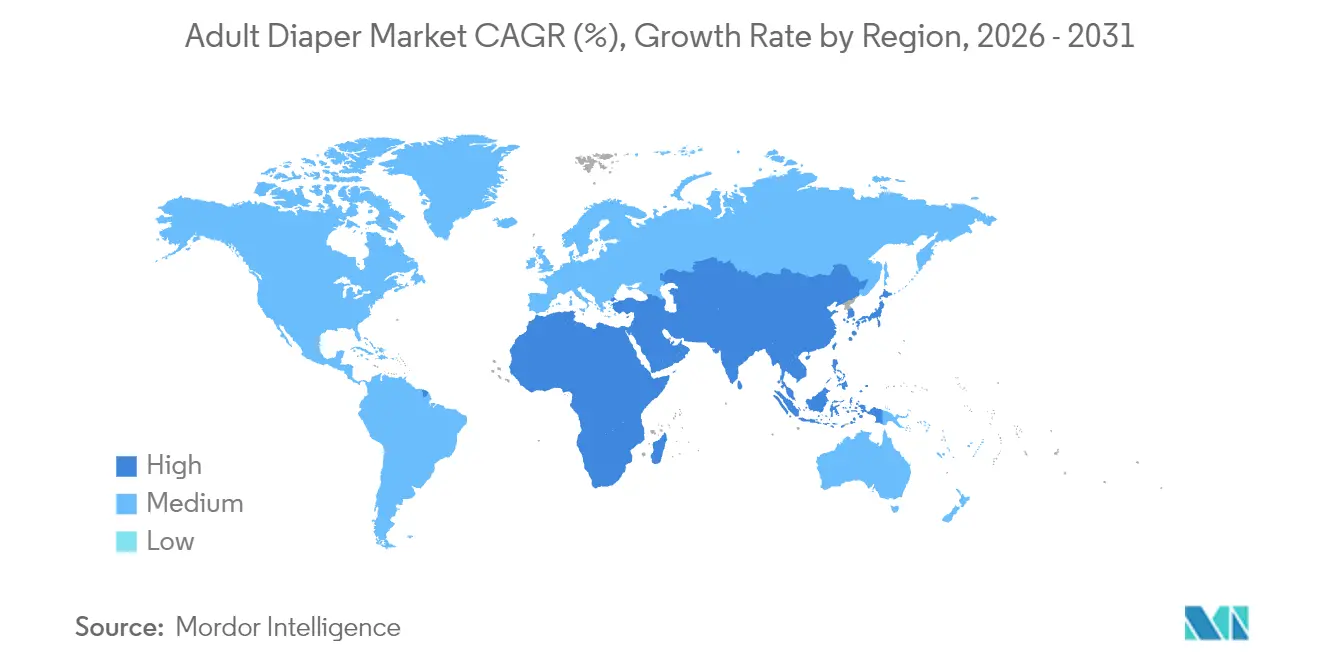
| Fastest Growing Market | Asia Pacific |
| Largest Market | North America |
| Market Concentration | Medium |
Major Players *Disclaimer: Major Players sorted in no particular order Image © Mordor Intelligence. Reuse requires attribution under CC BY 4.0. | |
Adult Diaper Market Analysis by Mordor Intelligence
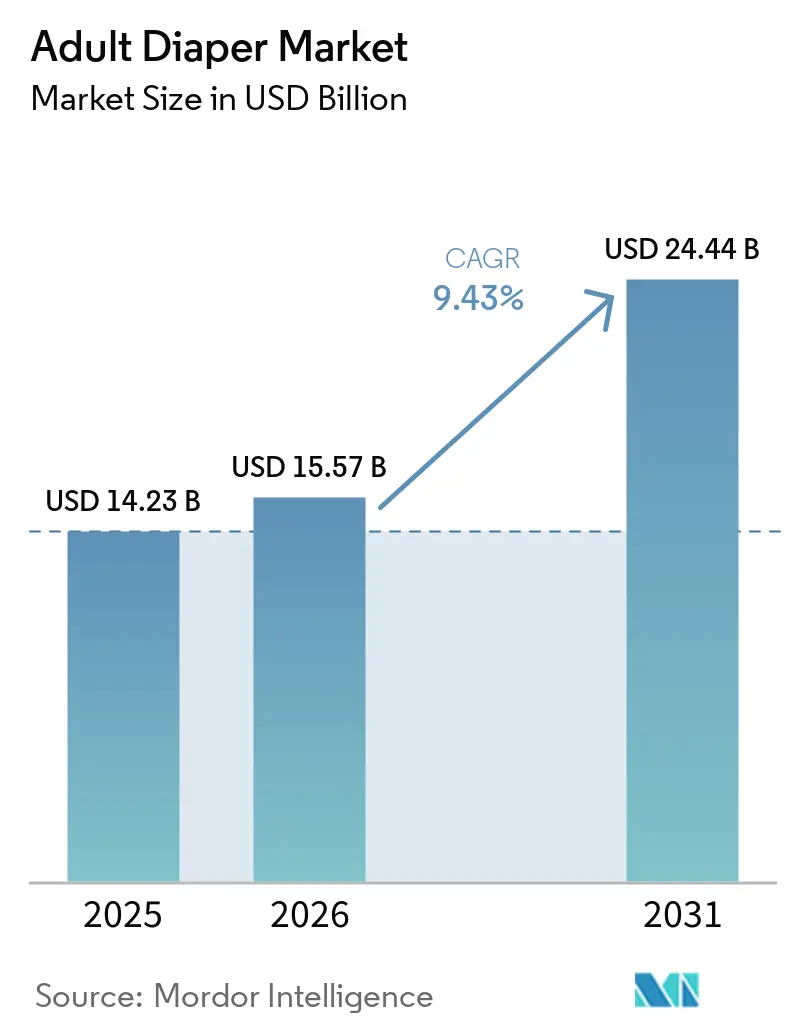
The adult diaper market size in 2026 is estimated at USD 15.57 billion, growing from 2025 value of USD 14.23 billion with 2031 projections showing USD 24.44 billion, growing at 9.43% CAGR over 2026-2031. This growth is primarily attributed to an aging population, increased diagnosis rates driven by the growing focus on preventive healthcare, and advancements in product design, such as thinner cores and discreet pant-style options. Public health education and medical outreach initiatives are effectively reducing stigma and driving higher adoption rates. Product innovations, including odor control, breathable materials, and gender-specific designs, are enhancing user comfort and expanding market penetration. The online retail channel is experiencing the fastest growth, as consumers increasingly prefer private purchasing options due to stigma. The Asia-Pacific region, led by China’s demographic expansion, is recording the highest growth rate, while North America remains the largest market, supported by advanced reimbursement policies and strong awareness programs. The competitive landscape is evolving, with manufacturers focusing on three key strategies, including premium product innovation, value-driven offerings, and sustainability-focused initiatives.
Key Report Takeaways
- By product type, moderate/heavy diapers led with 66.15% of adult diaper market share in 2025, while light diapers are on track to expand at 9.58% CAGR through 2031.
- By category, pads captured 56.55% revenue share in 2025; pant-style products are forecast to grow at 9.70% CAGR through 2031.
- By gender, the female segment accounted for 60.62% of the adult diaper market size in 2025, and unisex designs are projected to advance at 9.92% CAGR through 2031.
- By distribution channel, drug stores/pharmacies held 36.98% of the adult diaper market size in 2025, yet online retail is recording the fastest CAGR at 10.59% through 2031.
- By region, North America contributed 29.78% revenue in 2025, and Asia-Pacific is forecast to log the strongest 10.31% CAGR through 2031.
Note: Market size and forecast figures in this report are generated using Mordor Intelligence’s proprietary estimation framework, updated with the latest available data and insights as of 2026.
Market Trends and Insights
Drivers Impact Analysis of Adult Diaper Market*
| DRIVER | (~) % IMPACT ON CAGR FORECAST | GEOGRAPHIC RELEVANCE | IMPACT TIMELINE |
|---|---|---|---|
| Rising awareness of incontinence and elderly care | +2.1% | Global (stronger in Asia-Pacific) | Medium term (2-4 years) |
| Favorable Healthcare Initiatives by the government and associations | +1.8% | North America and Europe | Medium term (2-4 years) |
| Growing aging population drives the demand | +3.2% | Global (notably Japan, China, Europe) | Long term (≥ 4 years) |
| Product innovations in comfort, absorbency and discretion | +1.7% | Initial impact in North America and Europe | Short term (≤ 2 years) |
| Rising demand for home healthcare products | +0.6% | Global | Short term (≤ 2 years) |
| Increasing disposable income in emerging economies | +0.8% | Asia-Pacific | Medium term (2-4 years) |
| Source: Mordor Intelligence | |||
Rising awareness of incontinence and elderly care
The destigmatization of incontinence is accelerating market growth as healthcare organizations execute strategic awareness initiatives. In May 2025, the National Association for Continence (NAFC) partnered with the CDC on a pivotal program designed to enhance outcomes for women with urinary incontinence. This initiative addresses a significant knowledge gap, as highlighted by the Agency for Healthcare Research and Quality. Through its EvidenceNOW program, over 270 primary care practices have screened and treated more than 88,700 women for urinary incontinence, uncovering a substantial number of undiagnosed cases[1]. Consumer education efforts are proving effective, with the Continence Foundation of Australia reported in 2023 that urinary incontinence affects over 7.3 million Australians aged 15 and older, equating to a 33.7% prevalence rate[2]. These advancements establish a strong platform for targeted market expansion, creating growth opportunities for adult diaper manufacturers. Improved diagnostic tools and the growing prevalence of routine health screenings have driven the early identification of incontinence, accelerating the adoption of adult diapers. With healthcare professionals increasingly recommending absorbent products, patients are more likely to integrate them into their care routines.
Favorable healthcare initiatives by the government and associations
Government policies are increasingly positioning incontinence management as a healthcare priority, driving market growth. The Health Resources and Services Administration's 2024 update to Women's Preventive Services Guidelines requires coverage for urinary incontinence screening without cost sharing, effectively removing financial barriers to diagnosis. This regulatory change aligns with the Centers for Medicare and Medicaid Services' implementation of new quality measures for bowel and bladder incontinence, effective January 2025, which will streamline assessment and intervention protocols across healthcare facilities. Regulatory bodies are enforcing quality standards for adult diapers, strengthening consumer confidence, and driving product adoption. Collaborative initiatives are leveraging data on aging populations and incontinence prevalence, enabling businesses and policymakers to develop targeted solutions and enhance product accessibility. In markets such as Japan, Germany, and Sweden, where state-backed elderly care is well-established, the adult diaper market is both mature and steadily expanding, supported by favorable government policies.
Growing aging population drives the demand
Demographic shifts are significantly influencing the expansion of the adult diaper market by broadening its core consumer base. As of January 1, 2024, the European Union's population was estimated at 449.3 million, with individuals aged 65 years and older accounting for 21.6% of the total population[3]. This aging trend is even more pronounced in China, where 15.6% of the population is aged 65 and above in 2024, according to data from the National Bureau of Statistics of China. The aging process often results in weakened muscle tone and diminished bladder control, leading to conditions such as urinary or fecal incontinence. Additionally, the prevalence of age-related diseases, including Parkinson’s, Alzheimer’s, diabetes, stroke, and arthritis, further exacerbates the likelihood of incontinence among older adults. These factors collectively create a substantial and stable demand for adult diapers, positioning the market for sustained growth.
Product innovations in comfort, absorbency and discretion
Technological advancements are revolutionizing the adult diaper market, transforming these products from basic hygiene items into advanced wellness solutions tailored to evolving consumer needs. At the 2025 Innovation Nexus Showcased, hosted by the American Urological Association, DriQ Health introduced its cutting-edge AI-powered incontinence detection system. This innovative solution integrates incontinence monitoring with fall detection capabilities, aiming to enhance the quality of senior care and address critical healthcare challenges. In October 2023, Imerys, a prominent player in material science, launched its FilmLink product. This solution leverages fine Ground Calcium Carbonate (GCC) to significantly improve the breathability of adult incontinence pads, effectively meeting a key user requirement for enhanced comfort. These technological advancements are particularly transformative for the rapidly growing pant-style segment, where active consumers prioritize products that offer a combination of comfort, discretion, and seamless integration into their daily lifestyles.
Restraints Impact Analysis of Adult Diaper Market*
| RESTRAINT | (~) % IMPACT ON CAGR FORECAST | GEOGRAPHICAL RELEVANCE | IMPACT TIMELINE |
|---|---|---|---|
| Social stigma around incontinence | -1.2% | Global (strongest in developing regions) | Medium term (2-4 years) |
| Skin health concerns and risk of infections | -0.7% | Global | Short term (≤ 2 years) |
| The high cost of adult diapers limits the growth | -0.6% | Global | Medium term (2-4 years) |
| Lack of awareness in developing regions | -0.5% | Asia-Pacific and Africa | Short term (≤ 2 years) |
| Source: Mordor Intelligence | |||
Social stigma around incontinence
While awareness is on the rise, social stigma remains a critical challenge, restricting market growth by impeding product adoption. This stigma results in under-reporting and under-treatment of incontinence, driving consumers toward adult diapers instead of seeking medical interventions. Unlike other health-related products, consumers rarely discuss adult diapers, even when they recognize their utility. Many elderly or middle-aged individuals avoid discussing their symptoms, even with family members or healthcare providers. Without professional medical advice, they may remain unaware that adult diapers are a practical and effective solution. The impact of stigma varies across regions, with developing markets facing more pronounced challenges that offset favorable demographic trends. To address this issue, manufacturers are implementing measures such as discreet packaging and expanding online sales channels. In February 2025, phs Group partnered with organizations like Prostate Cancer UK to encourage open conversations and provide resources aimed at reducing the stigma associated with male incontinence, fostering a more supportive environment for men.
Skin health concerns and risk of infections
Manufacturers are driving innovation to address skin-related challenges, with adult diaper rash emerging as a significant concern. This issue stems from factors such as moisture, skin irritation, and infections, with symptoms ranging from mild discomfort to severe rashes requiring medical intervention. Individuals managing incontinence are particularly vulnerable due to prolonged moisture exposure, which can result in redness, irritation, and yeast infections, potentially impacting product adoption. The associated healthcare costs present a market opportunity for solutions focused on prevention and treatment. Key skin care measures include prompt cleaning after incontinence episodes, the use of gentle soaps, and the application of moisturizing or barrier creams. In response, manufacturers are improving product materials and designs, prioritizing breathability, moisture-wicking capabilities, and skin-friendly components. The increasing demand for biodegradable and natural materials, driven by skin health concerns, has boosted the adoption of organic cotton and bamboo, valued for their reduced irritation potential. These advancements are effectively addressing skin-related challenges, particularly within the premium product segment.
*Our forecasts treat driver/restraint impacts as directional, not additive. The impact forecasts reflect baseline growth, mix effects, and variable interactions.
Adult Diaper Market Segment Analysis
By Product Type:
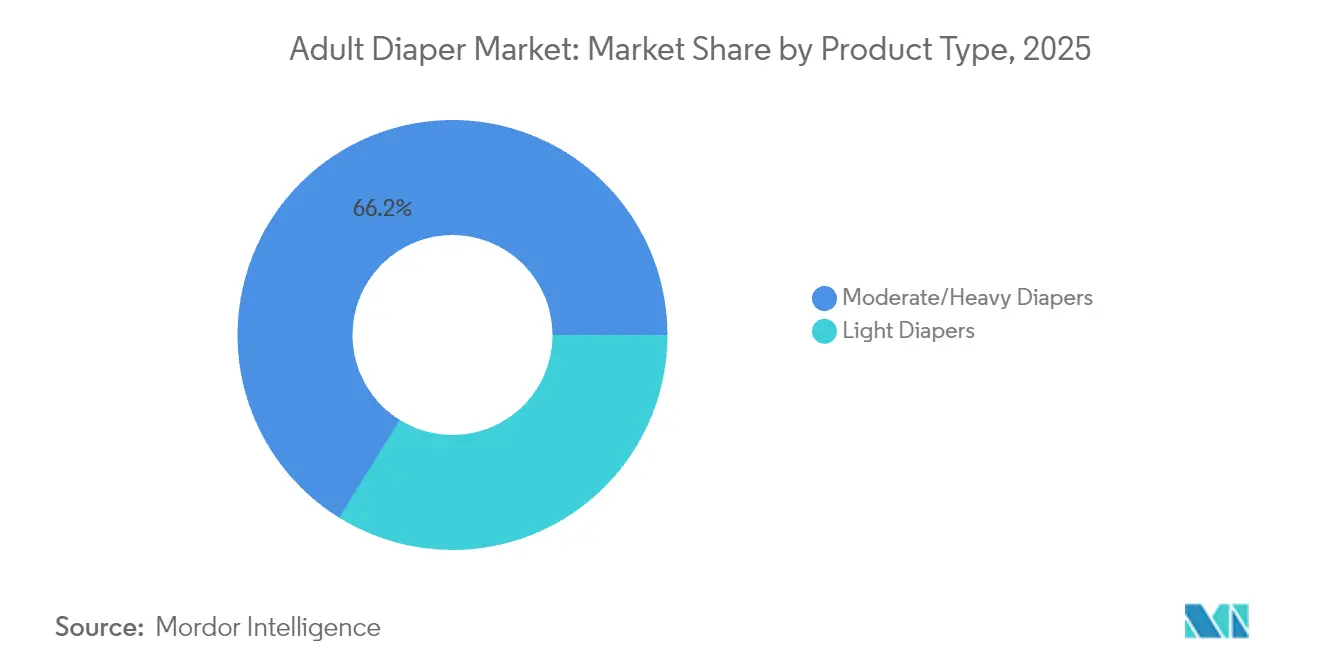
Light Diapers Gain MomentumThe moderate/heavy adult diaper segment commands 66.15% of the market share in 2025, serving individuals with severe incontinence needs, particularly in healthcare facilities and for overnight use. The light diaper segment, while currently accounting for a smaller share, is projected to grow at a strong CAGR of 9.58% during the 2026-2031 period. This growth is driven by increasing adoption among active adults with mild incontinence, who value discreet and comfortable solutions for daily use. This trend highlights a market shift toward specialized products designed for varying levels of incontinence, moving away from generalized offerings.
The 2025 Innovation Nexus Showcase, hosted by the American Urological Association, featured several advanced technologies for light incontinence management, including sensor-based systems that monitor moisture levels and notify users to prevent leakage. Material innovations are transforming both the moderate/heavy and light diaper segments. Superabsorbent polymers (SAPs) are being enhanced to improve absorption efficiency while maintaining a thinner design. Manufacturers are prioritizing the development of odor control technologies and breathable materials to address consumer concerns regarding discretion and skin health. This focus is particularly critical in the moderate/heavy segment, where extended usage increases the likelihood of skin irritation.

By Category:
Pant-Style Innovations Drive GrowthWhile pads maintain a significant 56.55% market share in 2025, pant-style (pull-up) adult diapers are projected to achieve a strong 9.70% CAGR from 2026 to 2031. The robust growth of pant-style diapers is driven by their superior combination of absorbency and wearability, appealing to active consumers seeking products that mimic traditional underwear. Product innovations in this segment are focused on enhancing discretion by reducing bulk and noise, with manufacturers leveraging thinner materials that retain high absorption capacity. The "others" category, which includes specialized products such as booster pads and overnight solutions, addresses niche market demands but holds a comparatively smaller market share.
The incontinence underwear segment for the elderly emphasizes the critical role of comfort, convenience, and affordability in product design. Traditional disposable adult diapers have faced challenges due to perceptions of bulkiness and discomfort. In response, manufacturers are introducing structural design enhancements and advanced fabric technologies to improve both functionality and user experience. The pad category continues to dominate the market due to its versatility and cost-effectiveness, particularly for managing light incontinence, but its growth rate lags behind the more innovative pant-style segment. Environmental sustainability is increasingly shaping consumer preferences, with biodegradable materials gaining traction across all product categories as eco-consciousness rises.
By Gender:
Unisex Products Gain Market ShareFemale-specific products dominate the adult diaper market with 60.62% share in 2025, reflecting the higher prevalence of urinary incontinence among women, particularly those who have experienced childbirth or menopause. The unisex segment is experiencing the fastest growth, with a CAGR of 9.92% projected for 2026-2031. This growth reflects a strategic focus on versatile products that cater to diverse consumer groups while optimizing inventory management for retailers and healthcare providers. Male-specific products hold a smaller yet stable market share, supported by designs tailored to address the unique anatomical factors influencing incontinence in men.
Recent innovations in the female segment emphasize discretion and comfort, focusing on designs that are anatomically tailored to meet the specific needs of women while ensuring minimal visibility under clothing. This approach aligns with the growing demand for products that seamlessly integrate into daily life without compromising functionality or aesthetics. Meanwhile, the expansion of the unisex segment is significantly driven by institutional buyers, including hospitals and nursing homes, which prioritize standardized products to enhance operational efficiency and streamline procurement processes. Additionally, retail consumers are increasingly recognizing the practicality of unisex options, as these products offer the added advantage of being shared among multiple household members managing incontinence, thereby providing both convenience and cost-effectiveness.
By Distribution Channel:
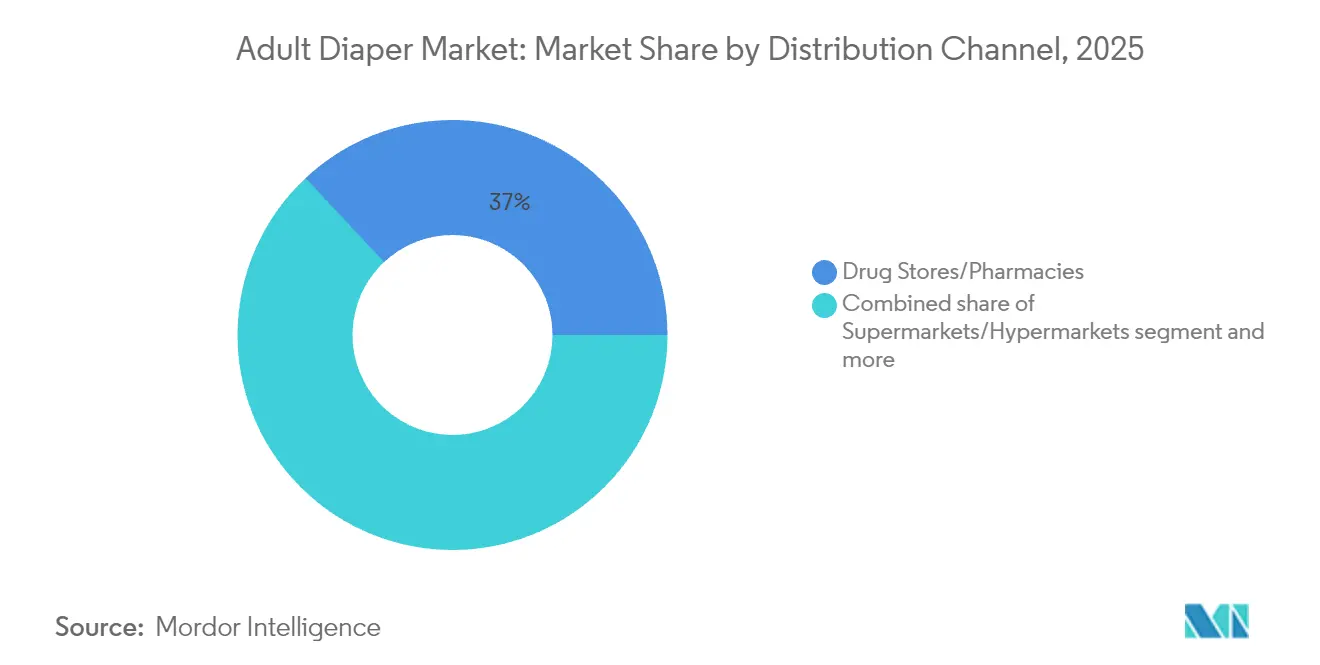
Online Retail Disrupts Traditional ChannelsOnline retail stores are rapidly gaining prominence in the adult diaper distribution market, recording a strong 10.59% CAGR from 2026 to 2031. This growth is disrupting the traditional dominance of drug stores and pharmacies, which accounted for 36.98% of the market share in 2025. The shift toward online channels is a strategic response to the persistent social stigma associated with incontinence products. Manufacturers are addressing this challenge by offering discreet purchasing options through e-commerce platforms. While supermarkets and hypermarkets provide the convenience of one-stop shopping, they lack the privacy that online channels offer. Additionally, the "others" category includes institutional buyers, such as hospitals and long-term care facilities, which procure products in bulk through specialized procurement channels.
The e-commerce growth trajectory is particularly notable in emerging markets like Vietnam. Soft International Group Ltd has adopted a Direct-to-Consumer (D2C) sales strategy for its adult incontinence products, leveraging e-commerce platforms to enhance customer engagement and drive revenue growth. The transition to online channels is also facilitating better consumer education, with detailed product information and comparison tools enabling users to make informed purchasing decisions. Drug stores and pharmacies, however, continue to maintain a significant market share due to their ability to provide immediate product availability and professional guidance from pharmacists. This personalized support is especially valuable for first-time buyers navigating the diverse range of adult diaper options.
Geography Analysis
North America Adult Diaper Market
North America accounted for 29.78% of global revenue in 2025, buoyed by advanced reimbursement frameworks and vigorous awareness campaigns. The integration of incontinence screening into preventive-care guidelines is anticipated to significantly enhance diagnosis rates and drive the adoption of premium products over the forecast period, extending through 2031. Consumers in the United States demonstrate a strong propensity to invest in breathable and dermatologically tested product variants, supporting the broader diaper market as manufacturers prioritize innovations that emphasize skin-health benefits and eco-friendly certifications. These developments align with evolving consumer preferences and strengthen demand for higher-value products.
APAC Adult Diaper Market
The Asia-Pacific region is positioned as the fastest-growing market, with a projected CAGR of 10.31% (2026-2031). The continued expansion of China's aging population is directly contributing to the growth of the adult diaper market. While Japan remains the most penetrated market globally, incremental growth is increasingly concentrated in mainland China, India, and Southeast Asia. This shift is driven by the rapid expansion of the middle class and the growing reach of e-commerce platforms. Regional brands are strategically adapting their product features to cater to local climatic conditions, such as incorporating ultra-breathable backsheets to address the needs of consumers in humid environments.
EMEA and South America Adult Diaper Market
Europe maintains a substantial market share, underpinned by well-established social safety nets and a high proportion of aging demographics. The region's strong emphasis on sustainability has accelerated the introduction of innovative products, including biodegradable cores and washable absorbent underwear. In contrast, South America, along with the Middle East and Africa, represents smaller but rapidly growing markets. Growth in these regions is being driven by government investments in elder-care programs and the expansion of product assortments by private pharmacies, which are increasingly catering to the diverse needs of aging populations.
Regulatory Landscape
Adult incontinence products face a split regulatory treatment based on intended use and labeling claims, with implications for market access and compliance costs. In the United States, protective garments for incontinence are regulated by the FDA as Class I medical devices under 21 CFR 876.5920, and they are generally exempt from 510(k) premarket notification, though establishment registration, labeling, and quality and safety controls still apply. In the European Economic Area, products positioned for medical use can fall under Regulation (EU) 2017/745 (MDR) as Class I medical devices, adding CE-marking responsibilities and MDR technical documentation expectations.
Standardization and product stewardship are also shaping regulatory expectations across global supply chains. In February 2026, ISO published ISO 15621:2026, updating general guidelines for evaluating absorbent incontinence products for urine, feces, or both, to support more consistent performance and safety assessment approaches across manufacturers and buyers. Industry bodies such as EDANA continue to provide safety and regulatory supply-chain guidance for absorbent hygiene materials, reinforcing requirements around chemical safety, traceability, and responsible material use alongside regional medical device and consumer product rules.
Competitive Landscape
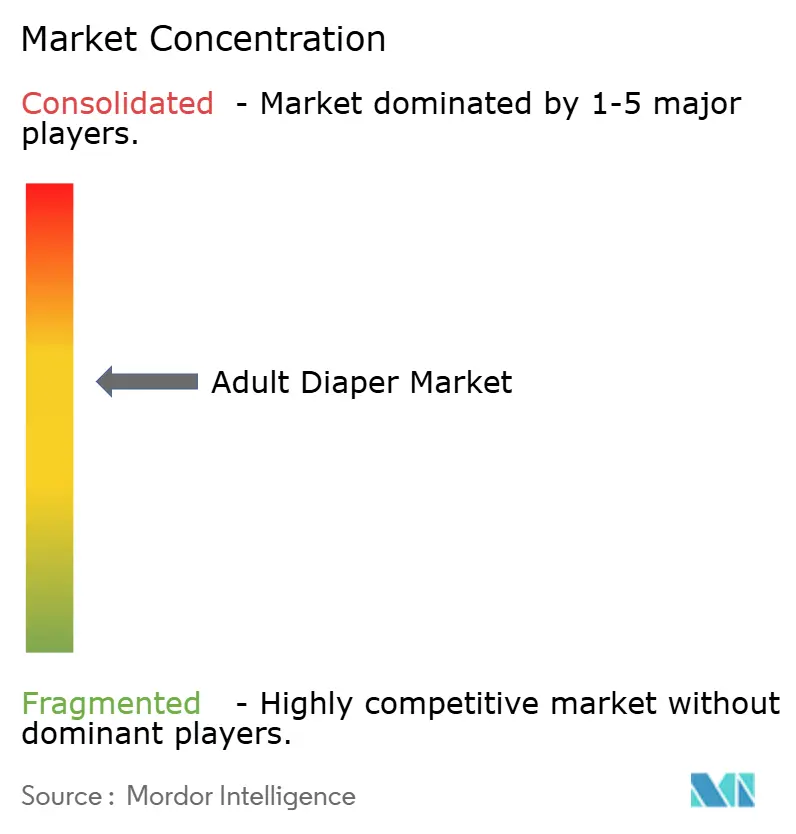
The adult diaper market is moderately consolidated, with established players and emerging challengers competing intensely for market share. Leading companies such as Kimberly-Clark Corporation, Procter and Gamble Company, Unicharm Corporation, Kao Corporation, and Essity AB dominate the market by capitalizing on their expansive distribution networks and substantial investments in research and development. These strategic efforts enable them to sustain their leadership positions and drive innovation within the market.
The competitive dynamics of the market are undergoing significant transformation as manufacturers increasingly adopt three pivotal strategies to differentiate themselves. These include premium innovation, which prioritizes enhanced comfort and superior performance; value positioning, which focuses on delivering cost-effective solutions without compromising on essential functionality; and sustainability leadership, which emphasizes the development of environmentally friendly alternatives to conventional products. To remain competitive and achieve sustainable growth, companies must continuously innovate and align their offerings with the rapidly evolving preferences and demands of consumers.
Emerging start-ups are disrupting traditional market dynamics by leveraging direct-to-consumer business models and incorporating Internet of Things (IoT) technologies into their products. For instance, in 2024, DriQ Health introduced AI-enabled briefs that notify caregivers, addressing staffing shortages in long-term care facilities and enhancing operational efficiency. Additionally, material suppliers such as Imerys are embedding themselves deeper into the value chain by collaborating with brand research and development teams to co-engineer advanced breathable fillers. This approach not only strengthens their partnerships but also ensures their offerings extend beyond standard commodity supply, adding significant value to the overall product development process.
Adult Diaper Industry Leaders
-
Kimberly-Clark Corporation
-
Unicharm Corporation
-
Kao Corporation
-
Essity AB
-
Procter and Gamble Company
- *Disclaimer: Major Players sorted in no particular order
Adult Diaper Market Companies Covered in this Report
- Kimberly-Clark Corporation
- The Procter & Gamble Company
- Essity AB
- Unicharm Corporation
- Chiaus(Fujian)Industrial Development Co., Ltd.
- Kao Corporation
- Ontex Group
- Domtar Corporation
- The HARTMANN GROUP
- FUBURG INDUSTRIAL CO., LTD.
- Hengan International Group Company Limited
- Daio Paper Corporation
- First Quality Enterprises, LLC.
- Drylock Technologies
- Nobel Hygiene Private Limited
- TZMO Group
- The ABENA Group
- Medline Industries, LP
- Principle Business Enterprises, Inc.
- Samela, Inc. (NorthShore Care Supply)
Market Opportunities and Future Outlook
Product differentiation is shifting beyond baseline absorbency toward skin health, fit, and comfort, creating space for brands and material suppliers to translate clinically adjacent needs into consumer-friendly designs. Ontex has highlighted the scale of skin irritation among people living with incontinence, supporting continued innovation in hypoallergenic topsheets, pH-balanced or skin-protecting layers, and breathable constructions. These themes align with the market shift toward thinner cores and discreet pant-style options. In 2026, upstream material launches such as The LYCRA Companys LYCRA ADAPTIV fiber for nonwovens (introduced at INDEX 26) and ZymoChems BAYSE bio-based, biodegradable superabsorbent polymer point to technology pipelines aimed at improved fit, reduced localized pressure, and alternative absorbent chemistries.
Regulatory and standards updates also support opportunities for compliant, sustainability-oriented portfolios and clearer performance communication to institutional buyers and e-commerce consumers. ISO 15621:2026 provides an updated reference for evaluation of absorbent incontinence products, which can help standardize internal testing and buyer specifications. In Europe, MDR remains a key framework when products are marketed for medical use, raising the value of strong technical documentation, conservative claims, and post-market practices for companies competing through pharmacy and institutional channels. On the supply side, major North American investments, including Kimberly-Clarks USD 2 billion manufacturing expansion plan and First Qualitys announced adult care capacity additions, indicate continuing efforts to secure domestic output and scale higher value adult care formats, supporting deeper assortments across pads and protective underwear.
Recent Industry Developments in Adult Diaper Market
- May 2026: Kao Corporation announced an improved launch of its Relief Marude Shitagi adult diaper line, highlighting a 1 mm thickness design. The update reinforces the premiumization trend around discretion and underwear-like wearability, supporting faster adoption among active users and caregivers seeking less bulky options.
- April 2025: Unicharm India introduced a diabetes-focused adult incontinence range under its Lifree portfolio. This positioning expands adult care coverage for patients and caregivers managing comorbidities.
- December 2024: Liquid Death and Depend collaborated to release a limited-edition adult diaper concept aimed at event and mosh pit use. While niche, the collaboration shows how mainstream branding partnerships can influence consumer perception and reduce stigma through unconventional marketing and product design.
Adult Diaper Market Report Scope and Research Methodology
Market Definition and Coverage
The adult diaper market, for this methodology, covers disposable absorbent hygiene products designed for adults to manage urinary or fecal incontinence and related mobility needs, across retail and institutional buying.
Scope exclusions: This sizing does not count reusable cloth products, pediatric diapers, skin care creams, or unrelated continence devices such as catheters.
Segments Covered in This Report
- By Product Type
- Light Diaper
- Moderate/Heavy Adult Diaper
- By Category
- Pad
- Pant-style (Pull-up)
- Others
- By Gender
- Male
- Female
- Unisex
- By Distribution Channel
- Supermarkets/Hypermarket
- Drug Stores/Pharmacies
- Online Retail Stores
- Others Distribution Channel
- By Geography
- North America
- United States
- Canada
- Mexico
- Rest of North America
- Europe
- Germany
- United Kingdom
- Italy
- France
- Spain
- Netherlands
- Poland
- Belgium
- Sweden
- Rest of Europe
- Asia-Pacific
- China
- India
- Japan
- Australia
- Indonesia
- South Korea
- Thailand
- Singapore
- Rest of Asia-Pacific
- South America
- Brazil
- Argentina
- Colombia
- Chile
- Peru
- Rest of South America
- Middle East and Africa
- South Africa
- Saudi Arabia
- United Arab Emirates
- Nigeria
- Egypt
- Morocco
- Turkey
- Rest of Middle East and Africa
- North America
Data Sources, Market Sizing, and Validation
Desk Research
Desk work started by locking the definition and building the demand and supply context across major regions, so that later assumptions do not float without checks. We referred to public health and population datasets such as the World Health Organization (WHO), United Nations population tables, and national statistical offices for aging trends and household structure.
For market signals, we also used sources such as UN Comtrade for trade flows where relevant, customs and tariff schedules for product mapping, and peer reviewed clinical and public health literature to sense-check incontinence prevalence and care pathways. Company filings, investor presentations, and reputable press were used to understand channel mix shifts (including online), pricing direction, and capacity or expansion announcements. A few paid subscriptions for company financials and intelligence, along with patent databases, were used selectively to fill gaps in private company visibility and product innovation tracking. These examples are not exhaustive, and many other public sources were reviewed for data collection, validation, and clarification.
Primary Interviews and Surveys
Primary work focused on validating what is really being purchased and at what price points, since pack sizes, absorbency tiers, and retail promotion intensity can change the value outcome quickly. We spoke with a mix of manufacturers, distributors, retailers, and institutional buyers, and we also checked views from healthcare-facing stakeholders who influence product choice. Coverage was balanced across APAC, EMEA, and the Americas so regional differences in reimbursement, pharmacy role, and online penetration were properly reflected in the model.
Distribution of primary research fieldwork respondents
| Company type | Respondent position | Region |
|---|---|---|
| Top tier: 29% | CXOs: 15% | APAC: 46% |
| Mid tier: 54% | Functional/Unit leaders: 38% | EMEA: 32% |
| Smaller Players: 17% | Managers: 47% | Americas: 22% |
Market-Sizing & Forecasting
Sizing was built using a top-down approach where population aging and care-setting indicators are translated into an addressable user pool, and then mapped to likely usage rates and purchasing channels. Once the demand pool was shaped, value was derived by applying average selling price logic that reflects format mix, absorbency level mix, and typical pack size and promotion effects.
To keep results grounded, the totals were cross-checked with selective bottom-up approximations, such as sampling supplier and channel revenue signals, and checking implied volume against reasonable per-user consumption ranges in retail and institutional settings. Inputs that were used as practical levers (illustrative) included the 65+ population base, incontinence prevalence direction from published health literature, shifts toward pant-style products, online channel penetration, and regional price points in pharmacies and mass retail. For forecasting, scenario analysis was used, where pricing and mix shifts were varied around an expected path and then reconciled with what interviewees considered realistic for premiumization and channel expansion. Where a bottom-up check had missing coverage, the gap was handled through conservative scaling based on region and channel presence, followed by a re-check of implied per-capita consumption.
Data Validation & Update Cycle
Model outputs were tested against independent signals, including implied spend per older adult, regional channel growth patterns, and whether price and mix assumptions stayed consistent with what the market can absorb. When outliers were found, the underlying drivers were re-opened, and targeted re-contacts were triggered to confirm whether the variance came from definition, channel coverage, or pricing logic.
Before sign-off, the work goes through a multi-step review where another analyst checks calculations, currency handling, and whether assumptions align with the stated scope. Reports are refreshed annually, and interim updates are made when material events occur, such as major pricing moves, capacity additions, or regulation changes. Right before delivery, we make a final pass to ensure the latest public information is reflected.
Mordor Intelligence's Adult Diaper Market Size Measured Against Other Published Estimates
Published market sizes for adult diapers often differ because each source draws the line around products and channels in its own way, and then applies different price and usage assumptions. Differences also come from which year is treated as the base, how currency is converted, and how often the model is refreshed.
In this study, the largest gap drivers tend to be whether bed protectors and drip collectors are counted inside the core value, how pant-style versus pad mix is treated, and whether institutional consumption is estimated with realistic usage ranges. Some sources also project price growth aggressively without checking it against retail promotion patterns and pack-size realities, which can lift the value estimate quickly. The table points to these scope and ASP-handling differences, which are filtered through a single, consistently refreshed model in Mordor Intelligence.
Benchmark comparison
| Source | Market Size | Gaps in Research Methodology |
|---|---|---|
| Mordor Intelligence | USD 15.57 B (2026) | |
| Industry Publisher A | USD 21.90 B (2025) | Uses a different base year and a broader counted basket by type, and the value outcome is sensitive to how premium pricing is extended through the full forecast window without tight retail promotion checks. |
| Research Portal B | USD 18.20 B (2023) | Anchors the series on an earlier base year and includes adjacent categories such as bed protectors and drip collectors, which can expand the addressable value beyond core adult diaper formats. |
Across the three figures, the spread mainly comes from what gets counted as an adult diaper versus adjacent protection products, and from how pricing and format mix are carried forward. By keeping the demand pool tied to aging and care-setting signals, and then applying channel-aware price and mix assumptions that can be rechecked, the estimate stays traceable to clear steps and inputs.
Key Questions Answered in the Report
How big is the adult diaper market in 2026?
The adult diaper market stands at USD 15.57 billion in 2026 and is on course to reach USD 24.44 billion by 2031.
What is driving the fastest growth segment?
Pant-style pull-ups are the fastest-growing category at a 9.70% CAGR because they combine slim profiles with underwear-like comfort.
Why are online sales accelerating?
E-commerce solves privacy concerns linked to incontinence products, helping online retail log a leading 10.59% CAGR from 2026 to 2031.
Which region offers the highest growth potential?
Asia-Pacific posts the strongest 10.31% CAGR, underpinned by China’s rapidly expanding 65-plus population and rising health-care access.