Optogenetics Market Size and Share
Market Overview
| Study Period | 2020 - 2031 |
|---|---|
| Market Size (2026) | USD 626.49 Million |
| Market Size (2031) | USD 729.29 Million |
| Growth Rate (2026 - 2031) | 4.81 % |
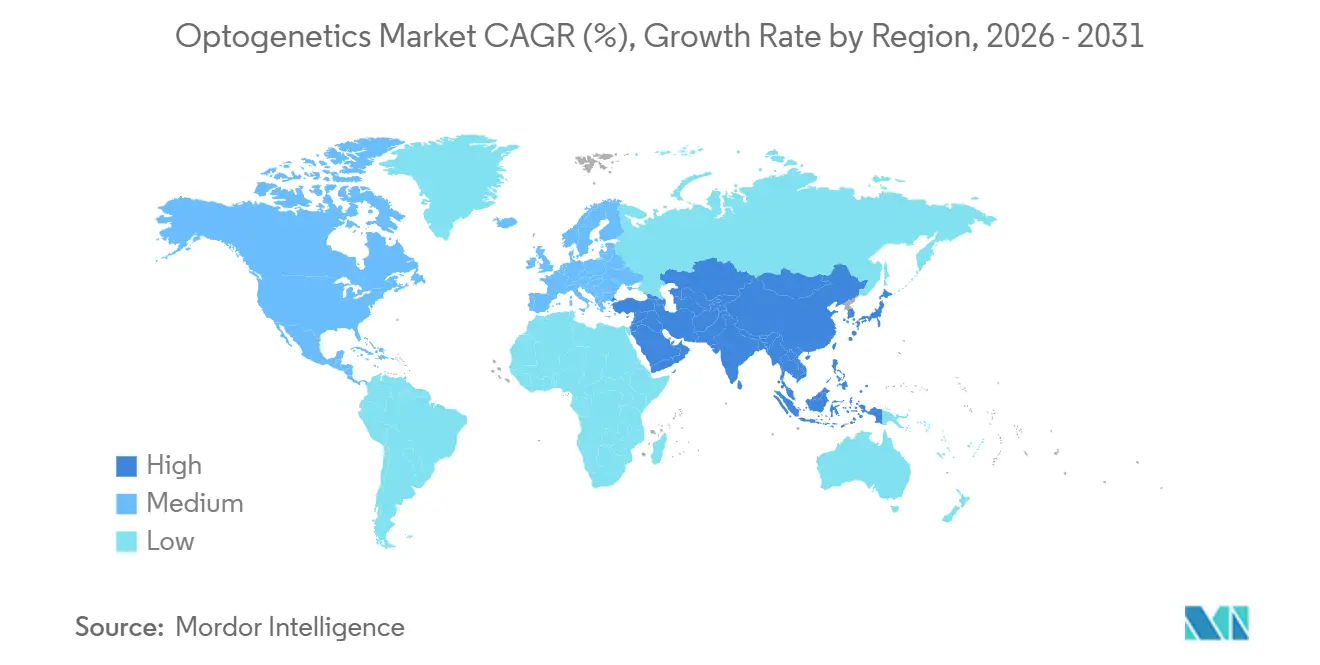
| Fastest Growing Market | Asia Pacific |
| Largest Market | North America |
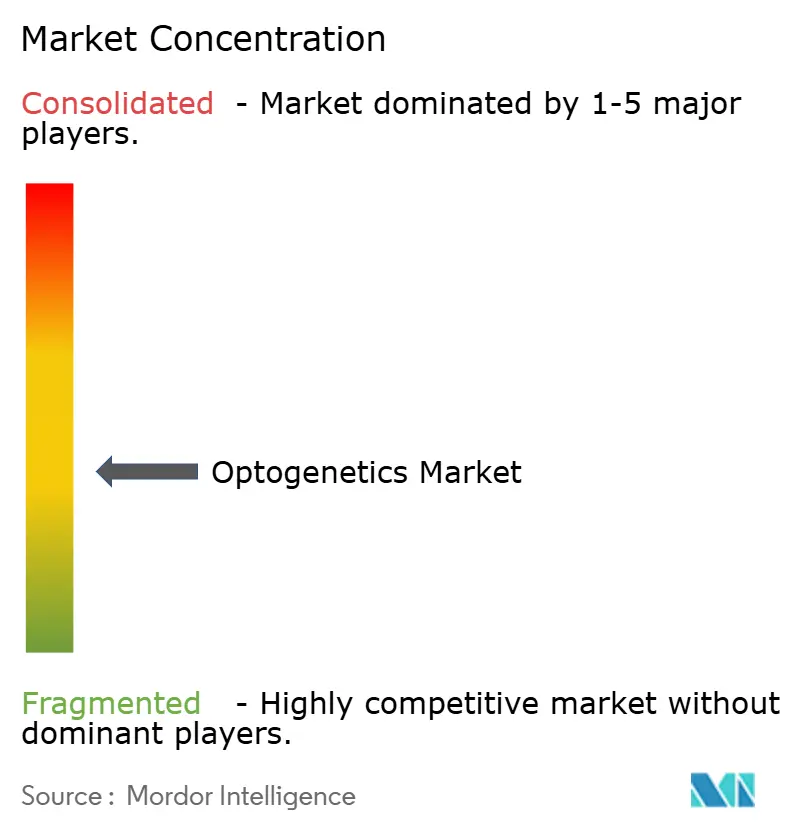
| Market Concentration | Medium |
Major Players *Disclaimer: Major Players sorted in no particular order Image © Mordor Intelligence. Reuse requires attribution under CC BY 4.0. | |
Optogenetics Market Analysis by Mordor Intelligence
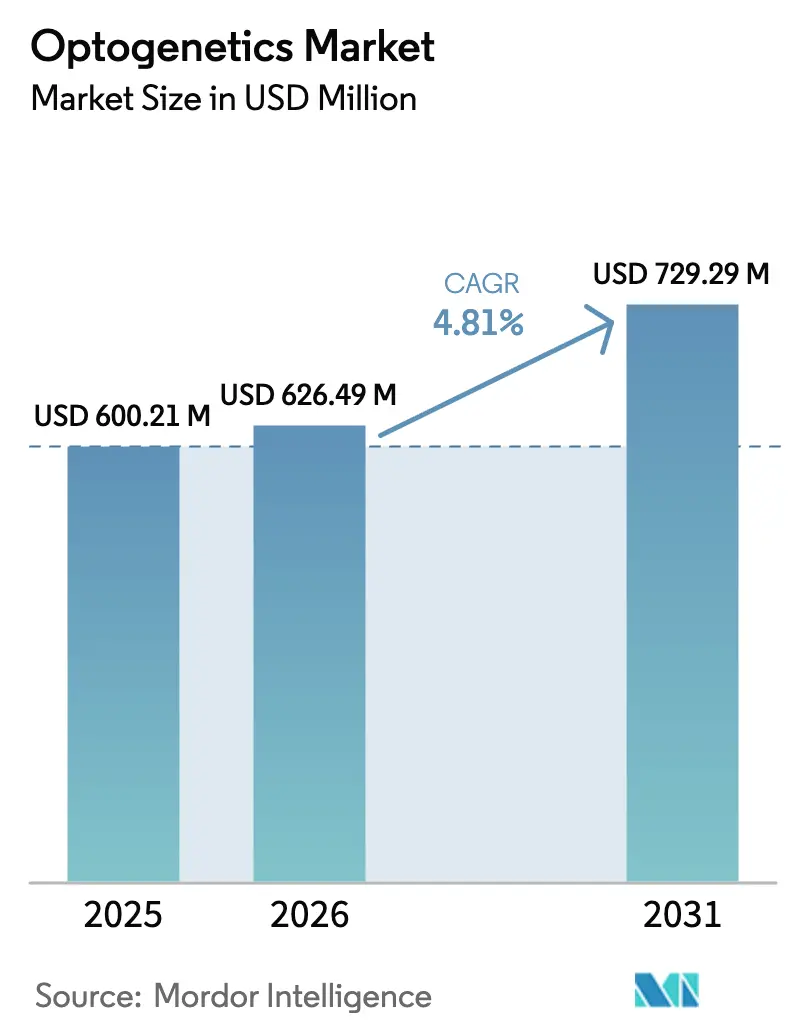
The Optogenetics Market size is expected to increase from USD 600.21 million in 2025 to USD 626.49 million in 2026 and reach USD 729.29 million by 2031, growing at a CAGR of 4.81% over 2026-2031.
Capital is shifting from pure discovery projects to late-stage vision-restoration pipelines as three investigational therapies received FDA Fast Track or Breakthrough Therapy status during 2024-2025, signaling that commercial viability is replacing proof-of-concept as the field’s primary yardstick. Hardware vendors are compressing form factors and prices to meet demand for closed-loop neuromodulation, while opsin engineers are advancing red-shifted variants that enable deeper tissue penetration without photothermal injury. Investors are betting on vertically integrated players that bundle light sources, vectors, and analytics software, a strategy that crowds out academic tool vendors yet accelerates translational timelines. Regulatory agencies across three continents now publish dedicated optogenetics guidance, reducing dossier duplication and cutting 6 months from the average IND-enabling program.
Key Report Takeaways
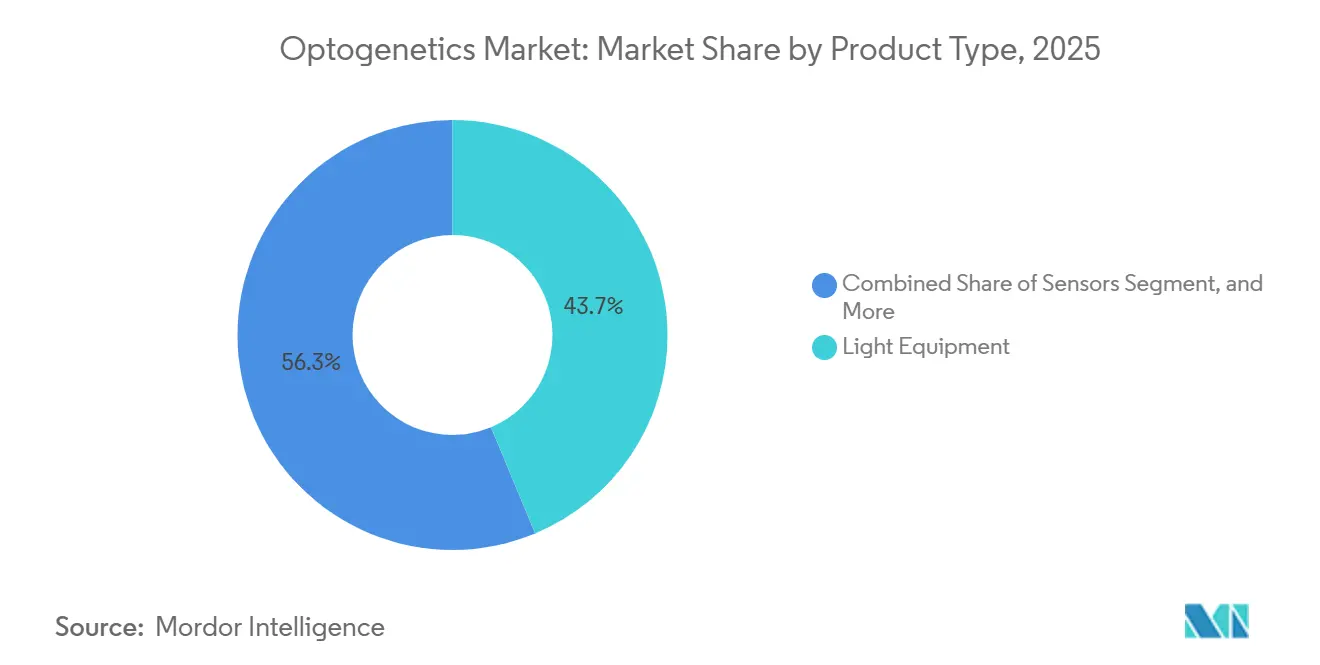
- By product type, light equipment led the optogenetics market with a 43.72% revenue share in 2025, while sensors are advancing at a 6.06% CAGR through 2031.
- By technique, viral vector delivery captured 31.27% of the optogenetics market size in 2025; non-viral and nanoparticle delivery is growing fastest at a 7.63% CAGR.
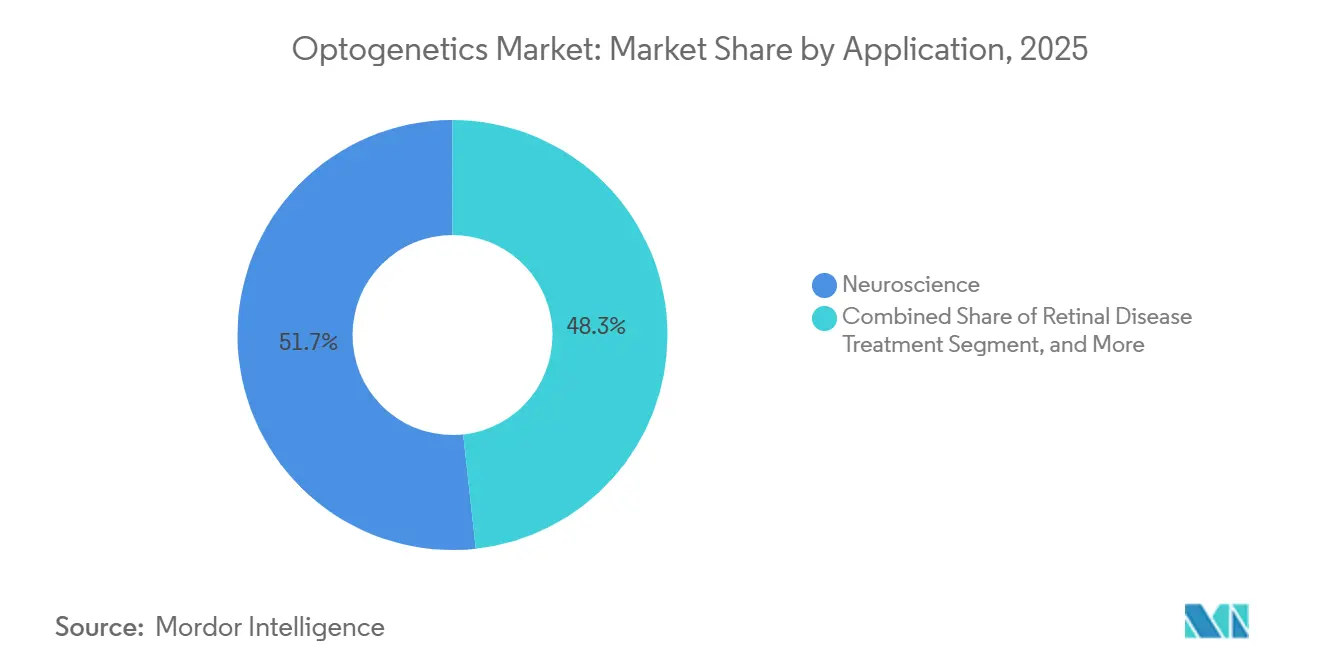
- By application, neuroscience accounted for 51.72% of the optogenetics market share in 2025, but retinal disease treatment is projected to record the highest 8.18% CAGR to 2031.
- By end user, academic and research institutes accounted for 57.78% of 2025 spending, yet biotech and pharmaceutical companies are scaling at a 9.41% CAGR.
- By geography, North America accounted for 41.08% of 2025 revenue, while Asia-Pacific is on track for the fastest expansion at a 10.27% CAGR through 2031.
Note: Market size and forecast figures in this report are generated using Mordor Intelligence’s proprietary estimation framework, updated with the latest available data and insights as of January 2026.
Global Optogenetics Market Trends and Insights
Drivers Impact Analysis*
| Driver | (~) % Impact on CAGR Forecast | Geographic Relevance | Impact Timeline |
|---|---|---|---|
| Rising Neuroscience Research Funding & BRAIN Initiative | +0.9% | North America, Europe, with spillover to Asia-Pacific academic hubs | Medium term (2-4 years) |
| Growing Prevalence of Neurological & Retinal Disorders | +1.2% | Global, with acute burden in aging populations of North America, Europe, Japan | Long term (≥4 years) |
| Advances in Opsins, Viral Vectors & Mini-LED/Laser Hardware | +1.5% | Global, led by North America and Europe R&D centers | Medium term (2-4 years) |
| Surge in Vision-Restoration Clinical Trials | +1.1% | North America, Europe, with emerging activity in China | Short term (≤2 years) |
| AI-Enabled Closed-Loop Neuromodulation Platforms | +0.7% | North America, Europe, with early adoption in Japan and South Korea | Medium term (2-4 years) |
| Reshoring of Optical-Component Supply Chains | +0.5% | North America, Europe, driven by CHIPS Act and strategic autonomy policies | Long term (≥4 years) |
| Source: Mordor Intelligence | |||


Rising Neuroscience Research Funding & BRAIN Initiative
United States federal appropriations fell from USD 680 million in 2023 to USD 321 million in 2025, yet the budget now prioritizes optogenetic tools with direct clinical endpoints.[1]National Institutes of Health, “BRAIN Initiative Funding,” nih.gov The BICAN atlas program alone awarded USD 126 million in 2024 to projects that tag brain-cell types with opsins, creating data sets already licensed by tool makers for assay validation. Europe’s Human Brain Project committed EUR 89 million (USD 97 million) in 2025 to platforms that integrate optogenetic readouts with electronic health records, while Japan’s Brain/MINDS 2.0 put JPY 15 billion (USD 102 million) toward marmoset disease models, positioning regional CROs for outsourced studies. The redirection of grants toward translational milestones favors companies able to supply hardware, vectors, and software as unified packages rather than à-la-carte components. This grant landscape strengthens the optogenetics market by underwriting both early discovery and preclinical validation phases.
Growing Prevalence of Neurological & Retinal Disorders
Age-related retinal degeneration and inherited retinal dystrophies affected 285 million individuals in 2025, with incidence climbing 3.2% annually.[2]WHO, “World Vision Impairment Data,” who.int Approximately 40% of legally blind patients in high-income nations are ineligible for cell transplants or electronic implants, leaving optogenetic therapy as a prime alternative. Parkinson’s disease cases reached 8.5 million in 2024, and preclinical optogenetic stimulation shows promise for cell-type-specific modulation without permanent electrodes. Epilepsy affects 50 million people globally, and a 2025 rodent trial reported a 62% drop in convulsions after closed-loop optogenetic inhibition. Demand therefore rises for scalable vectors, miniaturized light sources, and analytics platforms capable of chronic, cell-specific intervention.
Advances in Opsins, Viral Vectors & Mini-LED/Laser Hardware
Red-shifted channelrhodopsins such as ChRmine extend controllable depth beyond 3 mm, a 50% gain over earlier blue-light tools. Addgene shipped 12,400 optogenetic plasmids in 2024, of which 38% contained red-shifted constructs, indicating a clear preference for deeper penetration.[3]Addgene, “Plasmid Distribution Statistics,” addgene.org Novel AAV capsids now achieve 10-fold higher retinal ganglion-cell transduction, reducing vector doses and per-patient manufacturing costs by USD 18,000. Inscopix commercialized a 16-channel wireless micro-LED array in 2025, removing fiber-optic tethers that previously constrained animal movement studies. Simultaneously, laser-diode miniaturization lowered module volume to 8 × 8 × 15 mm, allowing fully implantable cardiac pacemakers in porcine trials.
Surge in Vision-Restoration Clinical Trials
Between 2024 and 2025, four retinal gene-therapy programs enrolled 412 patients, a 3.4-fold rise over 2020-2023. Nanoscope’s MCO-010 met its Phase 2b endpoint when 55% of retinitis pigmentosa patients gained ≥15 letters on the ETDRS chart. GenSight’s GS030 achieved object-localization gains in 63% of participants, leveraging goggles that convert images into amber light for ChR-activation. Bionic Sight’s BS01 received FDA Fast Track in 2024, while Ray Therapeutics inaugurated a first-in-human trial for RAY-01 in 2025. Collectively, these milestones signal investor confidence that optogenetic vision restoration will mature into a commercial category by decade’s end.
Restraints Impact Analysis*
| Restraint | (~) % Impact on CAGR Forecast | Geographic Relevance | Impact Timeline |
|---|---|---|---|
| High Capital Cost of Lasers & GMP Viral-Vector Manufacture | -0.8% | Global, with acute impact on emerging markets lacking subsidized infrastructure | Long term (≥4 years) |
| Gene-Therapy Regulatory Stringency & Long Timelines | -0.6% | North America, Europe, with gradual harmonization in Asia-Pacific | Medium term (2-4 years) |
| Photothermal Safety Limits for Red-Shifted Actuators | -0.3% | Global, particularly affecting deep-tissue and chronic stimulation applications | Medium term (2-4 years) |
| Talent Drain of Advanced Microscopists to Other Photonics Sectors | -0.4% | North America, Europe, with emerging impact in China and Japan | Long term (≥4 years) |
| Source: Mordor Intelligence | |||
High Capital Cost of Lasers & GMP Viral-Vector Manufacture
Building a 200 L GMP viral-vector plant can cost USD 45-65 million, a barrier that bars most academic spin-outs from vertical integration. Multi-wavelength laser systems run USD 80,000-150,000, and full behavioral setups can exceed USD 500,000, limiting adoption in budget-constrained settings. Contract manufacturers charge USD 250,000-400,000 per AAV batch, so Phase 1/2 ophthalmology trials often front-load USD 1.2 million in vector costs before dosing begins. Emerging markets must also absorb import tariffs and regulatory delays that tack on 12-18% to hardware prices and extend lab commissioning by 2 years. These factors collectively dampen uptake in developing regions.
Gene-Therapy Regulatory Stringency & Long Timelines
FDA guidance issued in 2024 demands 12-month toxicology in two species plus biodistribution across three ocular tissues, extending IND packages to 24 months and adding USD 3-5 million per program. The European Medicines Agency now requires large-animal proof-of-concept before orphan-drug status, delaying GenSight’s European filing by nine months. Post-approval, mandatory five-year patient monitoring costs USD 12,000-18,000 per subject, squeezing reimbursement margins. Japan’s SAKIGAKE pathway trims formal review yet obligates sponsors to gather real-world data from 200 patients within seven years, a heavy lift for seed-stage firms. China’s ten-year post-marketing registry adds quarterly surveillance, lifting life-cycle costs by 22%.
*Our forecasts treat driver/restraint impacts as directional, not additive. The impact forecasts reflect baseline growth, mix effects, and variable interactions.
Segment Analysis
By Product Type: Sensors Gain Ground on Closed-Loop Demand
Light Equipment maintained a 43.72% stake in 2025, as fiber-coupled LEDs and laser diodes remained lab staples, even as average selling prices slid 6% amid new Chinese entrants. Actuators, including ChRmine and Chrimson, benefited from deeper penetration requirements, expanding shipments by 22% in 2024, according to Addgene.
Sensors are outpacing all other categories at a 6.06% CAGR. The FDA classified closed-loop neuromodulation as Class III in 2024, but it also issued a streamlined combination-product path that catalyzed demand for calcium and voltage sensors tethered to real-time processors. Inscopix’s nVoke couples a 1.2-g miniscope with on-board GPUs, enabling adaptive experiments that are impossible with legacy open-loop rigs. As these systems proliferate, component suppliers are integrating embedded AI to automate feedback, a feature that strengthens the optogenetics market’s long-term stickiness among drug-discovery teams.


By Technique: Non-Viral Methods Challenge AAV Dominance
AAV-based Viral Vector Delivery held 31.27% of 2025 revenues, buoyed by three FDA-approved retinal gene therapies that validate the platform. Emerging serotypes with 10-fold retinal transduction enable dose cuts and reduce per-patient COGS by USD 18,000.
Non-viral and Nanoparticle Delivery is expanding at a 7.63% CAGR, eclipsing transgenic-animal workflows as ultrasound and lipid nanoparticles bypass AAV’s 4.7 kb limit and immune responses. A 2024 Nature Biomedical Engineering paper reported 42% cortical-neuron transfection with a 9 kb construct using focused ultrasound, a feat unattainable with standard vectors. Given the FDA’s 2024 clinical hold on an AAV-retinal trial due to inflammation, labs are pivoting to nanoparticle kits that pair well with rapid mRNA expression and transient safety profiles.
By Application: Retinal Disease Outpaces Neuroscience Growth
Neuroscience still accounted for 51.72% of 2025 revenue, supported by 11 NIH-subsidized core facilities that link viral-vector supply with microscopy training. Behavioral tracking platforms such as Noldus EthoVision now leverage machine-learning classifiers to correlate locomotion with real-time optogenetic perturbations across 340 labs worldwide.
Retinal Disease Treatment is advancing at the fastest pace, with an 8.18% CAGR. The addressable cohort comprises RP or geographic-atrophy patients with intact inner retina, totaling 1.2 million in the U.S. and EU, and economic models show willingness-to-pay up to USD 600,000 per treatment. GenSight’s PIONEER topline, released in 2024, demonstrated meaningful function in 63% of subjects wearing image-converting goggles, a dataset expected to anchor 2025 BLA filings. Positive momentum here lifts the overall optogenetics market size by seeding high-value procedures reimbursed under gene-therapy frameworks.
By End User: Biotech Firms Accelerate Adoption
Academic and research institutes spent 57.78% of their budgets in 2025, thanks to USD 1.8 billion in public grants spanning the NIH, ERC, and national brain programs. Mandatory construct-sharing within six months of publication generates network effects that drive broader uptake.
Biotech and Pharmaceutical Companies constitute the fastest-growing cohort, with a 9.41% CAGR. Danaher’s 2024 acquisition of Inscopix folds mini-scopes into multimodal screening suites, while Merck KGaA’s 2025 Addgene collaboration aims to halve GPCR assay timelines. Circuit Therapeutics raised USD 45 million to pilot optogenetic pain management, the first non-sensory clinical application of the technology. Consequently, the optogenetics market share attributed to industry users will rise steadily as pharma integrates opsin-based readouts into mainstream pipelines.
Geography Analysis
North America accounted for 41.08% of 2025 revenue, buoyed by NIH’s USD 321 million BRAIN budget and an extensive roster of CDMOs capable of delivering research-grade AAV in 12 weeks. Eighteen of 28 active optogenetic trials are conducted under the FDA’s 2024 streamlined ocular-gene guidance, underscoring U.S. primacy in first-in-human studies. Canada’s CAD 22 million (USD 16 million) CIHR program accelerates the development of closed-loop epilepsy devices, while concurrent filings with Health Canada and the FDA trim four months off regulatory timelines.
Europe benefits from harmonized 2024 EU guidance that cuts IND-enabling costs by 18% and allows one dossier for multi-country trials. Germany leads hardware exports, shipping 4,200 LED modules in 2024, a 16% jump over 2023. The UK Dementia Research Institute invested GBP 18 million in optogenetic Alzheimer's disease projects, leveraging subsidized GMP capacity at national therapy centers. France’s GenSight generated EUR 42 million in 2024 revenue on milestone payments, spotlighting therapeutic traction in the region.
Asia-Pacific is the velocity leader at 10.27% CAGR. China’s CNY 2.1 billion (USD 290 million) brain-mapping fund mandates optogenetic validation, creating guaranteed domestic demand. Japan’s Brain/MINDS 2.0 and SAKIGAKE fast tracks shave four years off conventional approval cycles, attracting Western sponsors to local CROs. South Korea’s USD 28 million national optogenetics center focuses on psychiatric disorders, while India and Australia channel smaller but strategic grants into low-cost hardware and pain-addiction research.
Middle East & Africa and South America remain nascent. Qatar’s USD 3.2 million allocation and South Africa’s USD 1.8 million lab signal early-stage capacity building, but FAPESP’s 30% cost-share cap forces Brazilian investigators to outsource vector work offshore, elongating lead times by 18 months.

Regulatory Landscape
Optogenetics spans device-drug combination products (light delivery hardware plus gene therapy vectors, and in some programs, wearable goggles), so it is handled through established combination-product frameworks rather than a single optogenetics-specific rule set. In the United States, the FDA Office of Combination Products coordinates oversight across CDER and CDRH, and manufacturers must align quality systems and current good manufacturing practice controls with 21 CFR Part 4 for products that include both drug and device constituent parts.
Requirements are tightening around traceability and labeling for device constituents used in combination products. In June 2025, FDA issued draft guidance addressing Unique Device Identifier (UDI) requirements for combination products with device constituent parts, reinforcing end-to-end identification from manufacturing through post-market surveillance. Internationally, ISO published ISO 20417:2026 in March 2026 (updating the prior edition) to standardize information supplied by medical device manufacturers, while in Europe the EMA works with National Competent Authorities to ensure device elements used alongside medicinal products meet EU Medical Device Regulation expectations. This increases the weight of compliant technical documentation for cross-border clinical supply and eventual commercialization.
Competitive Landscape
The optogenetics market is moderately fragmented as hardware, vector, and therapeutic niches converge. Thorlabs and Doric Lenses vie for module miniaturization; Thorlabs’ 8 × 8 × 15 mm blue-laser debut in 2024 trimmed the implant footprint by 40%, spurring wireless cardiac-pacing prototypes. Addgene’s 12,400-plasmid volume grants near-monopoly status, yet VectorBuilder’s three-week custom-cloning service is gaining footholds among time-sensitive biotech programs.
Therapeutic developers GenSight, Nanoscope, and Bionic Sight are locked in a race to file the first optogenetic BLA. GenSight’s 2024 PIONEER data became the clinical bar, pushing peers to pursue differentiated goggles or capsids. Inscopix’s nVoke platform is the only commercial closed-loop system, but its USD 180,000 price tag leaves room for mid-priced challengers. Patent intensity jumped 27% in 2024, with 142 USPTO grants covering red-shifted opsins, wireless LED arrays, and feedback algorithms, underscoring sustained innovation.
Compliance is emerging as a moat: six hardware vendors attained ISO 13485 certification during 2024-2025, qualifying them for clinical-trial supply contracts that demand audited manufacturing flows. Overall, strategic alliances between tool makers and therapeutics companies are narrowing gaps along the value chain and accelerating the development of end-to-end solutions.
Optogenetics Industry Leaders
Laserglow Technologies
Coherent Inc.
Thorlabs Inc.
Noldus Information Technology
GenSight Biologics S.A.
- *Disclaimer: Major Players sorted in no particular order

Market Opportunities and Future Outlook
The most evident commercial whitespace is in late-stage retinal disease treatment pathways that combine intravitreal gene delivery with external or implantable light stimulation, since that pathway shifts optogenetics from research tooling toward reimbursable therapy. In 2026, several milestones reinforced traction in this segment: Ray Therapeutics received FDA Regenerative Medicine Advanced Therapy (RMAT) designation for RTx-015 (retinitis pigmentosa), Restore Vision reported positive interim first-in-human Phase 1/2 findings in Japan for RV-001 (including no dose-limiting toxicities in enrolled patients), and clinical evidence published in 2026 covered UGX-201 in the safety and efficacy discussion for advanced nonsyndromic retinitis pigmentosa.
A second opportunity is earlier scaling of commercial-compliant manufacturing, packaging, and distribution for optogenetic gene therapies, which targets a recurring bottleneck in GMP vector supply and combination-product readiness. In July 2026, Nanoscope Therapeutics and Catalent expanded their partnership to support late-phase development and commercial supply activities for MCO-010, including commercial-compliant packaging and distribution aligned to the BLA process with FDA. These steps support more standardized supply chains for vectors, device constituents, and associated documentation, and they also create qualification paths for mid-tier hardware and sensor vendors as clinical-trial suppliers (ISO 13485-aligned manufacturing and UDI-ready device documentation) as closed-loop neuromodulation and vision restoration programs extend beyond early adopter centers.
Recent Industry Developments
- July 2026: Nanoscope Therapeutics and Catalent expanded their partnership around MCO-010 to cover late-phase development support and commercial-compliant packaging and distribution aligned with the FDA BLA process. The collaboration points to earlier investment in commercialization infrastructure for optogenetic gene therapies, tightening timelines between pivotal clinical work and launch preparation.
- June 2026: GenSight Biologics initiated engineering runs as part of the LUMEVOQ (GS010) technology transfer process at Catalent. Advancing tech transfer activities improves supply readiness and reduces execution risk for programs that depend on GMP vector availability and tightly controlled handling across clinical and early access channels.
- June 2025: Coherent Inc. introduced Osprey, a compact femtosecond laser positioned for optogenetics workflows (as well as microsurgery and medical device manufacturing). A smaller, production-oriented ultrafast laser platform supports broader access to precision photonics used in advanced optogenetics setups, including two-photon applications and device fabrication steps used by tool developers.


Research Methodology Framework and Report Scope
Market Definition and Coverage
For this study, the optogenetics market covers revenues generated from tools and systems that use light to control or measure genetically targeted cells, mainly in life science research and emerging translational uses.
Scope exclusions: This sizing excludes broad photonics instruments that are not purpose-built for optogenetics workflows, and it also excludes general lab consumables not directly tied to optogenetic experiments.
Segmentation Overview
- By Product Type
- Light Equipment
- Actuators
- Sensors
- By Technique
- Viral Vector Delivery
- Transgenic Animals & Cre-dependent Systems
- Non-viral & Nanoparticle Delivery
- By Application
- Neuroscience
- Retinal Disease Treatment
- Behavioral Tracking
- Cardiovascular & Pacing
- By End User
- Academic & Research Institutes
- Biotech & Pharmaceutical Companies
- Contract Research Organizations
- Hospitals & Clinics
- By Geography
- North America
- United States
- Canada
- Mexico
- Europe
- Germany
- United Kingdom
- France
- Italy
- Spain
- Rest of Europe
- Asia-Pacific
- China
- Japan
- India
- Australia
- South Korea
- Rest of Asia-Pacific
- Middle East & Africa
- GCC
- South Africa
- Rest of Middle East & Africa
- South America
- Brazil
- Argentina
- Rest of South America
- North America
Data Sources, Market Sizing, and Validation
Desk Research
Desk research is used to set the fact base, so our model starts with what can be checked in public records and repeatable datasets. We referred to sources such as NIH RePORTER for funding direction, PubMed and other peer-reviewed literature for usage trends and technique adoption, and clinical trial registries for translational activity.
We also used regulatory and classification context from sources such as the FDA and the European Commission pages that describe device and research-use pathways, which helps avoid mixing in adjacent imaging markets. Company filings, investor presentations, press releases, and university lab announcements were reviewed to understand product launches and pricing bands, and then these were sanity-checked with a paid subscription for company financials and, where relevant, patent databases. The desk research sources listed here are illustrative only, and many other public references were reviewed to collect, validate, and clarify the data points used in the final model.
Primary Interviews and Surveys
Primary interviews and surveys were used to pressure-test assumptions that are hard to verify from public information, especially around purchasing behavior, replacement cycles, and how frequently optogenetics setups are expanded versus rebuilt. We spoke with stakeholders across tool suppliers, distributors, and end users, including academic labs, research institutes, CROs, and pharma and biotech teams, and then we cross-checked inputs across APAC, EMEA, and the Americas to avoid a single-region bias.
Distribution of primary research fieldwork respondents
| Company type | Respondent position | Region |
|---|---|---|
| Top tier: 25% | CXOs: 12% | APAC: 47% |
| Mid tier: 60% | Functional/Unit leaders: 28% | EMEA: 30% |
| Smaller Players: 15% | Managers: 60% | Americas: 23% |
Market-Sizing & Forecasting
The market is sized using a top-down approach where research spending signals and reported adoption of optogenetics methods are translated into an addressable demand pool, then allocated into tool and workflow related spend. When the structure is clear, we use a selective bottom-up approximation to corroborate totals by combining sampled pricing with estimated unit volumes across common purchase bundles, such as light stimulation hardware, sensors, and supporting modules.
Key inputs that guided the model include public neuroscience and vision research funding direction, publication volume and technique mentions in optogenetics literature, installed base growth in high-activity labs, and replacement and upgrade cycles for light equipment and sensors. We also tracked application momentum, for example neuroscience experimentation versus retinal disease research, along with regional expansion signals, which explains why some years accelerate faster than others. Where bottom-up inputs were incomplete, gaps were handled by applying conservative penetration rates to the relevant end-user pool, then using interview-based checks on typical spend per lab and typical procurement timing.
Forecasting is run using scenario analysis supported by a simple multivariate regression layer, where the independent variables are the forward view on research funding, publication momentum, and expected adoption of newer delivery techniques. Final growth rates were then adjusted where primary respondents pointed to specific constraints, such as budget cycles or longer validation timelines for translational programs.
Data Validation & Update Cycle
Before finalizing the market size, our analysts compare the model output against independent signals such as funding direction, publication trends, and the pace of new tool introductions, which helps detect over-counting or missed scope. If a variance looks unusual, the assumptions are reviewed line by line, and follow-up calls are triggered to confirm whether the issue is pricing, unit volumes, or a timing mismatch.
A multi-step review is followed before sign-off, including peer review and a final consistency pass across regions and applications. Reports are refreshed annually, and interim updates are made when a material event changes demand or supply expectations. Right before delivery, we do a final check so the published view reflects the latest available public information and field feedback.
Mordor Intelligence's Optogenetics Market Size Compared Against Other Published Estimates
Published optogenetics market values often differ because each publisher picks different definitions, years, and inclusion rules, then applies its own assumptions on adoption and pricing. We treat these differences as expected, so the comparison is meant to show what typically drives the spread.
The biggest gaps usually come from whether estimates mix research tools with broader neurophotonics and imaging systems, and whether they assume aggressive scale-up into clinical use within the forecast window. Differences also show up in how prices are normalized across regions, how fast ASPs are assumed to fall as volumes rise, and how frequently assumptions are refreshed when funding and publication signals shift. The spread below is largely explained by counting only optogenetics-specific equipment and sensors tied to defined workflows, and not folding in adjacent optical platforms, a scope choice applied by Mordor Intelligence.
Benchmark comparison
| Source | Market Size | Gaps in Research Methodology |
|---|---|---|
| Mordor Intelligence | USD 0.63 B (2026) | |
| Global Consultancy A | USD 0.68 B (2025) | Uses an earlier base year and tends to include a wider set of supporting systems around optogenetics setups, which can lift the starting value versus an optogenetics-only equipment count. |
| Industry Publisher B | USD 0.78 B (2024) | Anchors the market on an older year and applies a faster adoption curve that implicitly assumes quicker scaling into non-research use cases, which inflates the initial level and growth path. |
Looking across the three figures, the differences are mainly tied to scope breadth, base-year selection, and how quickly adoption is assumed to expand beyond core research settings. By keeping the inputs traceable to funding, publication, and end-user buying patterns, the resulting market size stays easier to reproduce and update year over year.


Key Questions Answered in the Report
What is the projected value of the optogenetics market in 2031?
It is forecast to reach USD 0.79 billion by 2031, growing at a 4.81% CAGR from 2026-2031.
Which product category is expanding fastest within optogenetics?
Sensors are rising at a 6.06% CAGR due to demand for closed-loop neuromodulation platforms that integrate real-time imaging and AI-driven feedback.
Why is Asia-Pacific registering the highest growth rate?
Large public neuroscience funds in China and Japan, coupled with accelerated regulatory pathways such as SAKIGAKE, are driving a 10.27% CAGR for the region.
What restrains wider adoption of optogenetic therapies?
High capital outlays for GMP viral-vector plants and stringent gene-therapy regulations lengthen timelines and inflate costs, curbing uptake in resource-limited geographies.
Which clinical application shows the greatest commercial momentum?
Retinal Disease Treatment leads with an 8.18% CAGR, propelled by positive Phase 2 data and multiple FDA Fast Track designations for vision-restoration candidates.
Page last updated on: